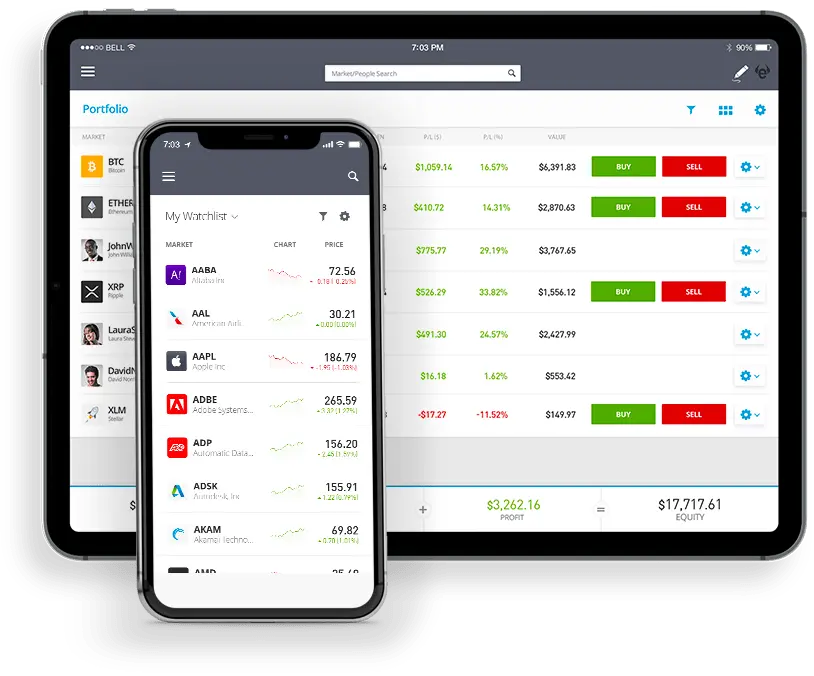
When I first decided to dip my toes into stock trading, eToro caught my attention. It wasn't just the buzz around it but the platform's user-friendly nature that drew me in. After all, I was eager to add Facebook stocks to my portfolio, and eToro seemed the ideal place.
Navigating through eToro's fee system was a bit overwhelming at first. But soon, I realized that understanding the difference between fees and commissions was the key. For someone like me, who meticulously checks every deduction on my trades, it was essential to get a grasp of this.
I was ecstatic when I discovered eToro's commission-free trading! But what did it really mean? Through my trades, I realized that while I wasn't being charged a direct commission, eToro had other subtle ways of earning.
The concept of spread fees was new to me. When I made my first Facebook stock purchase on eToro, I noticed a slight difference between the buy and sell prices. This "spread" was a small fee I was paying on each trade, something I've now come to account for in all my calculations.
One evening, as I leveraged a position on another stock, I was introduced to rollover fees. While it didn't apply directly to my Facebook stock, it was an essential lesson on the costs associated with holding leveraged positions overnight.
Navigating Currency Conversion Fees
Being based outside the U.S., I had to convert my local currency to USD when buying Facebook stock. While not hefty, the currency conversion fee on eToro was something I hadn't initially factored in but quickly learned to.
I recall an email from eToro, gently reminding me of potential inactivity fees after a long trading hiatus. Even though my Facebook stock lay untouched, it was a wake-up call to keep my portfolio active.
When the time came to cash in on some profits, eToro's withdrawal fee was a slight damper. Not exorbitant, but as someone who keeps tabs on every dime, it was a cost I learned to anticipate.
Having dabbled in other trading platforms, I can vouch that eToro's fee structure, especially for Facebook stocks, holds its ground. The platform's transparency and the no direct commission system have often given me a better deal.
Being on eToro has been a learning curve. From consolidating trades to avoiding the inactivity fees, every decision is based on lessons learned from personal experiences.
Navigating eToro's fee maze has been enlightening. While no platform is perfect, my journey buying Facebook stock on eToro has been mostly smooth. For anyone venturing into eToro, I'd advise keeping an eye on the detailed fee breakdown and always staying updated with the platform's policies.
eToro is a multi-asset platform which offers both investing in stocks and cryptoassets, as well as trading CFDs. Please note that CFDs are complex instruments and come with a high risk of losing money rapidly due to leverage. 61% of retail investor accounts lose money when trading CFDs with this provider. You should consider whether you understand how CFDs work and whether you can afford to take the high risk of losing your money. Past performance is not an indication of future results. Trading history presented is less than 5 complete years and may not suffice as basis for investment decision. Copy Trading does not amount to investment advice. The value of your investments may go up or down. Your capital is at risk. Cryptoasset investing is highly volatile and unregulated in some EU countries. No consumer protection. Tax on profits may apply. Don't invest unless you're prepared to lose all the money you invest. This is a high-risk investment, and you should not expect to be protected if something goes wrong. Take 2 mins to learn more. eToro USA LLC does not offer CFDs and makes no representation and assumes no liability as to the accuracy or completeness of the content of this publication, which has been prepared by our partner utilizing publicly available non-entity specific information about eToro.
 About Nadav Zelver