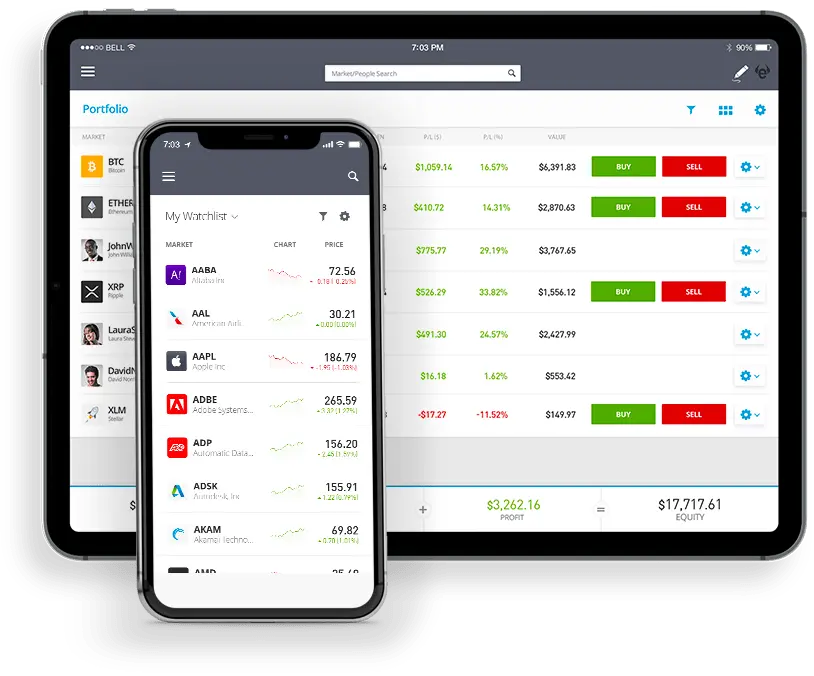
Welcome to our comprehensive comparison of eToro and FXTM (ForexTime), two prominent online trading platforms. As someone who's navigated the complexities of various trading platforms, I understand how crucial it is to choose the right broker. That's why we've meticulously dissected the key features of both eToro and FXTM, presenting a side-by-side analysis to highlight their similarities and differences. This deep dive will help you discern which platform aligns best with your trading needs and preferences.
Curious about eToro's platform and wondering if you can try it before fully committing. Absolutely! eToro offers a user-friendly demo account that you can access without any initial deposit. This feature was a game-changer for me, as it allowed me to familiarize myself with the platform's nuances and build confidence in my trading strategies without any financial risk. You're free to use the demo account indefinitely, transitioning to live trading only when you feel fully prepared. To start your eToro journey, simply click the button below for a streamlined online registration process.
Dive into our detailed comparison of eToro and FXTM. This comparison table is a culmination of the latest information from both brokers, giving you a clear, side-by-side view of their features. This will enable you to make an informed decision based on the most up-to-date data available.
Account Types
Exploring the account options provided by eToro and FXTM reveals some interesting differences. While both brokers offer retail and professional accounts, their approach to these accounts varies.
FXTM keeps it straightforward with these two primary account types. However, eToro steps up the game with its unique eToro Club. This tiered membership system offers additional privileges that are not based on the amount deposited but rather on the equity size in the user’s account. The tiers include:
It's important to note that the availability of the eToro Club varies depending on specific regulations and the languages supported on the platform. This aspect can be a deciding factor for many traders looking for more than just the basic account options.
Demo accounts are a staple in the world of online trading, and fortunately, both eToro and FXTM offer these valuable tools to their users.
What does this mean for you?
A demo account allows you to immerse yourself in the trading platform's environment. You can engage in test trades and familiarize yourself with the platform's features, all without the risk of losing real money. This is because demo accounts use virtual funds.
The eToro demo account stands out for its unlimited usage. As long as you maintain an active eToro account, you can use the demo account indefinitely. This is particularly advantageous for continuous learning and practice without any time constraints. On the other hand, FXTM’s demo account has a limited lifespan of just 21 days. This time restriction might be a downside if you prefer a more relaxed, pressure-free learning environment.
The benefit of a lifetime demo account can't be overstated. It offers the flexibility to switch to virtual trading whenever you wish, providing a safe space for risk-free trading practice whenever needed.
Interested in experiencing a demo account?
If eToro's offering has piqued your interest, you can easily explore its demo account by clicking the link below. Registration is straightforward, and there’s no immediate requirement for a deposit. This gives you the freedom to transition to live trading at your own pace, only making a deposit when you're ready to enter the real trading world.
Registering for an online trading account is a crucial first step, and both eToro and FXTM offer straightforward methods to get you started. You have the choice of using a web browser for registration, which is generally more convenient, or through their respective platform apps.
Here's a breakdown of the registration process:
For eToro, the initial sign-up is quite simple. You'll be prompted to provide a username, password, and email address. This straightforward approach is designed for quick and easy access.
In contrast, FXTM's registration process is slightly more detailed from the outset. They require your first name, last name, email address, and phone number. Interestingly, FXTM does not ask for a password immediately; instead, they request it after you confirm your registration via email. This two-step process adds a bit more time to the overall registration.
It's important to remember that these are just the initial steps. All reputable and regulated brokerages, including eToro and FXTM, are legally required to conduct a thorough verification of their clients. This involves completing your profile with additional personal details and providing proof of identity for security and regulatory compliance.
For added convenience:
Both eToro and FXTM also allow registration through social media platforms like Facebook and Google. If you're comfortable linking your trading account with these services, this option can streamline the registration process even further, making it a quick and seamless experience.
When you're ready to transition from a demo to a live trading account, understanding the minimum deposit requirements is crucial. Both eToro and FXTM have distinct policies based on the type of account and your location.
For eToro, the minimum deposit varies significantly depending on your country of residence. For instance, if you're in the United States, you can start trading with a minimum deposit of just $50. However, for residents of the United Kingdom, the requirement is higher at $200, or its equivalent in British pounds. Generally, eToro's minimum deposit can range anywhere from $50 to $1000, reflecting their global clientele.
FXTM, on the other hand, offers a more accessible entry point with a minimum deposit of just $10. However, it's important to note that this lower threshold is specifically for Cent account holders. If you opt for other account types, the minimum deposit requirements increase. For a Micro account, you'll need at least $50, while the Advantage and Advantage Plus accounts require a minimum of $500.
These varying deposit requirements are tailored to cater to a diverse range of traders, from beginners to more experienced ones, ensuring that there's an option suitable for everyone's needs and financial capabilities.
Choosing the right trading platform is a critical aspect of your online trading experience. Both eToro and FXTM offer a range of platforms, each catering to different needs and preferences.
eToro provides two primary platform options:
FXTM, however, offers a broader range of platform choices, allowing traders more flexibility based on their specific trading style and market analysis preferences:
It's important to note a key consideration with FXTM: not every asset is available across all their platforms. For instance, certain instruments accessible on the Web Trading platform may not be available on MetaTrader 4. This distinction can influence your platform choice depending on the assets you plan to trade. Each platform's unique features and the range of accessible instruments make it essential to choose the one that aligns best with your trading goals and strategies.
The diversity and range of assets offered by a broker are pivotal for broadening your investment portfolio. Typically, many brokerages offer a limited selection, ranging from about 100 to 500 tradable assets. However, a more extensive array of options opens up greater possibilities for diversification and exploring varied trading opportunities.
Let's look at the offerings from eToro and FXTM:
eToro stands out with a remarkable selection of over 3000 instruments. This extensive range, which continues to grow, offers a wealth of choices for traders. Whether you're looking to invest in stocks, commodities, currencies, or other markets, eToro's expansive portfolio provides ample opportunities.
FXTM, while not as extensive as eToro, still offers a commendable range of around 1000 assets. This is a significant improvement from their earlier portfolio of approximately 250 options. The expansion of their asset range marks a notable enhancement in their offerings.
What does this mean for you as a trader?
Having access to a wider array of assets allows for greater diversification in your trading portfolio. It's not just about having more stocks or currency pairs to choose from; it's about the freedom to explore and engage in a variety of markets. This diversification not only broadens your investment horizon but also gives you more control over your investments, enabling you to strategically place Buy and Sell contracts across a range of interesting and potentially lucrative markets.
Understanding the types of spreads offered by a broker is crucial for any trader. Spreads, which are the difference between the buying and selling price of an asset, come in two main types: fixed and variable.
Fixed spreads, as the name suggests, remain constant regardless of market conditions. This consistency can be beneficial for traders who prefer predictability in their trading costs. On the other hand, variable spreads fluctuate based on market performance. This means they can widen during times of high volatility, affecting trading costs.
eToro offers variable spreads. This means the spread can vary, especially for instruments prone to high volatility, like cryptocurrencies. These assets can have wider spreads compared to more stable asset classes. The variable nature of eToro's spreads makes them responsive to market conditions, which can be both an advantage and a disadvantage, depending on the market situation and your trading strategy.
In contrast, FXTM uses fixed spreads. These spreads are set at a fixed rate and do not change, irrespective of market fluctuations. Whether the market is experiencing a downturn or an upswing, the spread remains the same. This fixed rate can provide a sense of stability and predictability, which is particularly appealing to some traders.
It's important to recognize that both fixed and variable spreads come with their own set of benefits and drawbacks. The choice between the two should align with your trading style, strategy, and the specific market conditions you are most comfortable navigating.
The flexibility and variety of deposit methods are key factors in the convenience and accessibility of funding your trading account. Having a range of options not only adds to the convenience but also provides alternatives in case of technical issues or policy changes with certain payment methods.
eToro offers a diverse array of deposit methods to cater to its global user base. Traders can fund their accounts using:
It's important to note that the availability of these payment options may vary depending on your country of residence and the regulatory body overseeing your account. This variety ensures that most traders can find a convenient way to fund their accounts, regardless of their location or preferred payment method.
On the other hand, FXTM's range of banking methods is more limited, accepting:
While these options cover the most commonly used payment methods, the limited selection might be restrictive for some traders. If you primarily rely on a method that's not supported, or if your preferred payment service encounters issues or imposes restrictions on online trading transactions, your alternatives within FXTM are fewer.
In summary, while both platforms provide secure and reliable deposit methods, eToro offers a broader range of options, potentially making it more adaptable to a wider range of traders’ preferences and geographical locations.
Withdrawing funds from your trading account is an important aspect of your overall trading experience. Both eToro and FXTM have efficient processes in place for handling withdrawal requests.
Here's what you need to know:
eToro and FXTM typically process withdrawal requests within 1 business day, provided you have already submitted all necessary documentation. This swift processing time reflects the platforms' commitment to a smooth and efficient user experience.
However, it's crucial to understand what 'processing time' means in this context. This term refers to the duration eToro or FXTM takes to action your withdrawal request. It is not indicative of the total time it will take for the funds to appear in your bank account or chosen payment method.
The actual time for the funds to reach your account largely depends on your payment service provider. Under normal circumstances, this can vary from 3 to 8 business days. This variance is something to keep in mind, especially if you need access to your funds quickly.
In summary, while eToro and FXTM are efficient in processing your withdrawal requests, the total time for the funds to be available to you also depends on external factors, such as the processing times of your bank or chosen payment method. It's always a good idea to plan accordingly, especially if you're relying on these funds within a specific timeframe.
Customer support is a crucial aspect of any online brokerage service. While both eToro and FXTM offer solid customer support channels, there are some differences in the options they provide.
Both brokers allow you to reach their customer support teams via email and live chat. These methods have become the standard in the industry, especially as more users prefer online interactions over traditional phone calls. It's worth noting, however, that neither eToro nor FXTM currently offers phone support. This trend aligns with the broader industry's move towards digital communication channels.
eToro distinguishes itself with additional support options. Beyond email and live chat, eToro users can open a support ticket for more detailed inquiries. Additionally, eToro's Help Center is a standout feature, offering an extensive library of resources. This comprehensive database covers a wide range of topics and is particularly useful for users seeking quick answers to common questions or needing guidance on platform features.
FXTM, while not offering as many options as eToro, provides a basic FAQ page. This page addresses common queries and offers straightforward guidance on various aspects of their service. While not as extensive as eToro's Help Center, FXTM's FAQ is a helpful resource for users seeking quick answers to standard questions.
When choosing a broker, regulation should be at the forefront of your considerations. Opting for a broker that holds active licenses from reputable financial authorities, such as the FCA (Financial Conduct Authority) or CySEC (Cyprus Securities & Exchange Commission), is essential. These regulators are recognized for their stringent standards and reliable oversight.
Both eToro and FXTM are well-regulated, each holding licenses from multiple jurisdictions, which underscores their compliance with various international standards.
eToro's Regulatory Licenses:
FXTM's Regulatory Licenses:
These licenses indicate that both eToro and FXTM have met the high standards set by these respected regulatory bodies. This compliance not only demonstrates their commitment to operating within the bounds of financial laws but also provides a layer of security and trustworthiness for their clients. When trading with either of these brokers, you can be assured of their regulatory compliance and the protections that come with it.
Choosing between eToro and FXTM is essentially picking between two robust options in the world of online trading. My experience with both platforms, backed by their multi-regulated status and licenses from stringent bodies like the FCA and CySEC, reassures me of their reliability and commitment to trader security.
From a platform perspective, each offers a suite of tools that cater to various trading needs, ensuring accessibility and convenience across different devices. Their efficient withdrawal process, typically within one business day for verified accounts, places them ahead of many competitors in terms of speed and reliability.
However, it's crucial to acknowledge the unique strengths of each. eToro's prowess in social trading is undeniable. Its user-friendly and optimized platform makes social trading accessible, even for beginners, with a wealth of settings and customizations to manage risks effectively. The breadth of eToro's market offerings is impressive, surpassing 3000 instruments and continually expanding.
In contrast, FXTM shines in its spreads, offering exceptionally competitive rates, even reaching zero on major FX pairs. Though eToro's spreads are competitive, FXTM holds a slight edge in this area. Moreover, FXTM's expansion to around 1300 markets is commendable, though it still trails behind eToro's more extensive selection.
In sum, both eToro and FXTM stand as pillars of the online brokerage community. If your trading strategy leans towards maximizing opportunities in social trading, then eToro emerges as the more favorable choice. Its comprehensive platform and expansive asset offerings provide a fertile ground for both novice and experienced traders seeking to broaden their investment horizons.
"eToro vs FXTM: Full Broker Comparison"
"Choosing Your Broker: eToro or FXTM?"
"eToro vs FXTM: Which Wins for Traders?"
"eToro and FXTM: Side-by-Side Review"
"Comparing eToro and FXTM: Key Insights"
 About Nadav Zelver