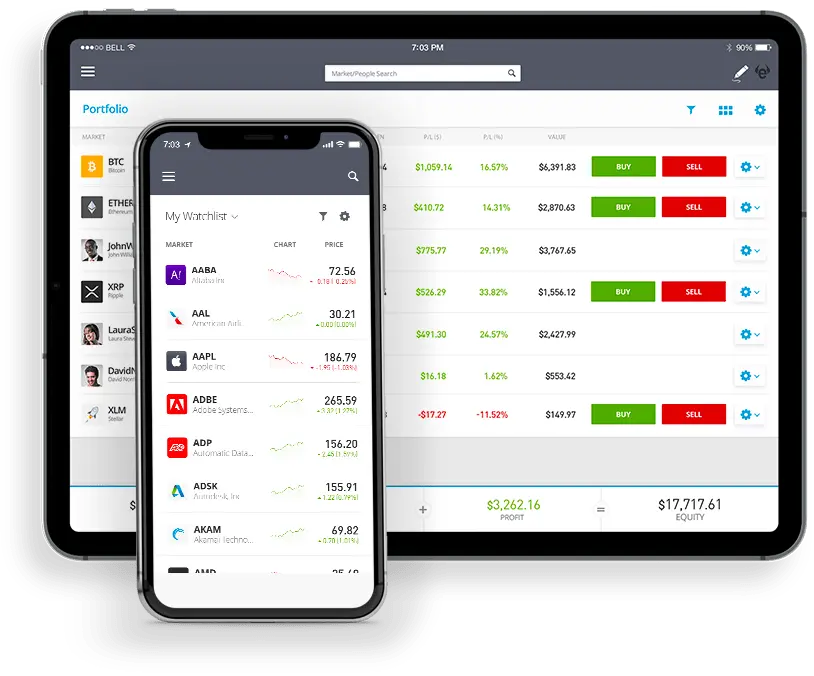
Navigating the world of online trading can be daunting, especially when choosing between top contenders like eToro and XM. As someone who's treaded these waters, I understand the importance of a detailed, side-by-side comparison to find the brokerage that aligns perfectly with your trading aspirations.
Have you been eyeing eToro’s trading platform, wondering if it's the right fit for you? I've been there, and here's some good news: eToro offers a risk-free way to dip your toes in the water. Their demo feature is a practical, hands-on approach to get a real feel of the platform without any financial risk. To access this valuable tool, you'll need to sign up for an account. It's a straightforward process, and I've made it even easier for you - just click the button below, and you'll be swiftly redirected to their quick online registration page. This is your first step towards a tailored trading experience that could redefine your investment journey.
If you're weighing your options between eToro and XM, this comparison table will be an invaluable resource. We've diligently compiled the most up-to-date information to showcase the strengths and unique features of each platform. Take a look below to see how eToro and XM stack up against each other in various categories.
Account Types
eToro: eToro offers two main types of accounts: retail and professional. The professional account is available through an elective process, which includes a qualification test. Furthermore, eToro boasts a tiered membership system known as the eToro Club. Membership tiers are determined by a client’s equity size, and each tier provides access to an array of exclusive benefits:
Please note that the eToro Club loyalty program is not available to all clients due to specific regulations, and may not support all platform languages.
XM: XM provides a diverse range of account types, each tailored with specific trading conditions that include variations in contract size, leverage, spread, and commission. These accounts are designed to meet the needs of different trading strategies and preferences:
Remember, the right choice depends on your individual trading needs and preferences. This comparison aims to provide a clear overview to help you make an informed decision.
Demo accounts serve as an essential tool for both beginners and seasoned traders. They offer a risk-free environment to explore and understand the trading platform, as beginners can learn without the fear of losing real capital. For experienced traders, these accounts are invaluable for honing trading strategies and testing new approaches.
Both eToro and XM offer demo accounts with no time limit, meaning you can use them as long as your account remains active. This unlimited access provides a consistent platform for ongoing learning and strategy development.
Here's an important distinction:
The unlimited use of eToro and XM's demo accounts offers a practical and extended learning curve for traders at all levels. The flexibility of XM's approach, despite the limit on the number of new accounts, still provides ample opportunity for thorough exploration and practice in the trading arena.
Signing up for an account with eToro is straightforward and user-friendly. Initially, you'll only need to provide a username, password, and email address.
What's convenient is eToro's integration with social media platforms:
On the other hand, the registration process with XM is more comprehensive, which might seem a bit daunting for newcomers. From the get-go, XM asks for detailed information including your full name, country of residence, preferred language, phone number, email address, as well as your preferred trading platform and account type. Remember, this is just the initial stage of the registration process. You will need to complete further steps to verify your account, which involves providing additional personal details.
Here's an important aspect to consider:
When it comes to minimum deposit requirements, eToro and XM offer different thresholds to suit various client needs.
Both eToro and XM cater to a wide range of traders, from those making their first foray into the financial markets to seasoned investors looking for a robust trading platform. These minimum deposit requirements reflect their commitment to inclusivity and accessibility in the world of online trading.
Choosing the right trading platform is crucial for a seamless trading experience. eToro and XM offer different platforms, each catering to varied trader needs and preferences.
1. eToro Platforms:
2. XM Platforms:
Here’s an important note:
The breadth of available markets a broker offers significantly influences your ability to diversify your investment portfolio. While many brokerages offer a range of 100 to 500 tradable assets, a wider selection provides more opportunities for exploring diverse trading options.
Benefits of a Broad Asset Selection:
In summary, both eToro and XM provide a commendable range of assets, each catering to the needs of traders looking for breadth and variety in their trading endeavors. This diversity is a critical factor in crafting a well-rounded and resilient trading portfolio.
Understanding the spread dynamics is crucial when trading with online brokers like eToro and XM. Both of these platforms offer variable spreads, which means the spread can fluctuate based on market volatility. As a result, assets with higher volatility may experience wider spreads compared to more stable ones.
Choosing Between Fixed and Variable Spreads:
It's important for traders to evaluate their personal preferences and market conditions when deciding which type of spread aligns best with their trading objectives. Both eToro and XM offer these options to cater to the diverse needs of their clients.
Choosing a broker with a wide array of deposit methods is crucial for flexibility and convenience in managing your online trading account. Many traders initially focus on common methods like credit cards, but unforeseen issues with banks or changes in their policies towards transactions with online brokerage firms can highlight the importance of having diverse funding options.
1. eToro's Payment Gateways: eToro offers a comprehensive selection of payment methods, ensuring that traders have multiple ways to fund their accounts. The available options include:
It's crucial to note that the availability of these methods may vary depending on your country, subject to local regulations and policies.
2. XM's Deposit Options: XM also supports a variety of payment options, catering to the needs of a diverse trading clientele. Their supported methods include:
Having a range of deposit methods at your disposal is more than just a convenience; it's a necessity for ensuring uninterrupted trading activities. Both eToro and XM recognize this need and provide their clients with multiple options to suit different preferences and requirements.
When it comes to withdrawals, both eToro and XM stand out for their efficiency. They process withdrawal requests within just 1 working day, which is notably quicker than many other online brokerages that typically require 3 to 5 working days.
However, there are important conditions to keep in mind:
In summary, while eToro and XM offer rapid processing of withdrawal requests, the total time to receive funds includes the processing time by your payment service provider. It's important for traders to understand and plan for these timeframes, especially when managing financial strategies and cash flow needs.
Customer support is a critical aspect of the user experience with online brokers. While both eToro and XM provide customer assistance, their methods of communication and support resources vary.
1. Communication Channels:
2. eToro's Additional Resources:
Apart from standard communication channels, eToro enhances its customer service experience with additional tools:
3. XM's Support Structure:
In summary, while both eToro and XM provide essential customer support through email and live chat, eToro offers a more diverse set of tools for customer assistance. These options cater to different user preferences, ensuring that clients can find help in a way that suits them best.
The regulatory status of a broker is a crucial factor in assessing its reliability and safety. Licensed brokers are subject to strict oversight and must adhere to high standards of operation, offering greater security for traders.
1. eToro's Licenses:
2. XM's Licenses:
In terms of regulatory compliance, both eToro and XM are well-positioned, holding licenses from multiple respected financial authorities. This parity in regulatory oversight demonstrates their commitment to maintaining high standards of operation and trader security. It's a crucial aspect that provides peace of mind for traders, knowing their chosen broker adheres to stringent regulatory requirements.
In my journey of exploring the nuances of online trading platforms, I've observed that eToro and XM share many commonalities. Both are robust, multi-regulated entities, offering a variety of platform choices, supporting numerous payment methods, and impressively, processing withdrawals within a single business day.
However, the devil is in the details, and that's where the subtle yet significant differences come into play. My experience with eToro revealed its edge in offering a wider array of tradable assets, spanning diverse classes. This extensive selection not only enhances the trading experience but also opens up more opportunities for portfolio diversification. Another notable strength of eToro is its social trading feature, which I found to be a game-changer, offering insights and strategies from a community of traders – an invaluable tool, especially for those new to trading.
On the flip side, XM shines with its lower barrier to entry, thanks to its minimal deposit requirement. This feature is particularly appealing to newcomers in the trading arena or those cautious about high initial investments. Additionally, XM's commitment to trader education and resources is commendable. Their comprehensive educational materials provide a solid foundation for both novice and experienced traders, enriching the trading journey with valuable learning resources.
In conclusion, while both platforms offer compelling features, eToro stands out to me. Its combination of a vast asset portfolio and the unique aspect of social trading presents a dynamic and engaging trading environment. It's this blend of variety, innovation, and community that positions eToro a notch above, in my perspective.
"eToro vs XM: A Comprehensive Broker Comparison"
"Choosing Your Broker: eToro or XM?"
"eToro vs XM: Trading Platforms Face-Off"
"Find Your Fit: eToro vs XM Detailed Review"
"eToro vs XM: Insights for Smart Trading Decisions"
 About Nadav Zelver